
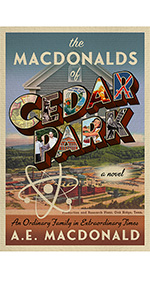
Based on real letters from an ordinary American family, The Macdonalds of Cedar Park is not a story about generals or battles. It is about what happens to a family when the world is at war and demands everything, and the government demands their silence.
When Pearl Harbor is attacked, and the country goes to war, Donald “Mac” Macdonald is recruited by the Manhattan Project. His wife, Bertha, manages the new rules regarding blackouts, rationing, recycling rubber and tin needed for the war effort, and security around her husband’s new job. Their oldest, Sonny, 18, knows he’ll be drafted and endeavors to join the ski-and-mountaineering troops, the 10th Mountain Division, using his friends and family to gather the necessary recommendations. Youngest son, Ig, is about to enter High School, becomes a messenger in the Boston office of the Manhattan Project, and at 15, gets his driver’s license to deliver groceries. While Mac uses all his engineering skills in the race to bring the boys home, Sonny is determined to survive in the Apennine Mountains of Italy, and Ig has lost his carefree teenage years to work and school. Bertha hopes the secrecy is worth all the sacrifice. By war’s end, the close-knit family is changed forever.


Blog Posts about WWII and my family
Uncovering My Grandfather’s Role in the Manhattan Project, Part 2
The author traces their grandfather’s involvement in the Manhattan Project, detailing research efforts through archives and uncovering significant historical contributions and personal sacrifices.

Uncovering My Grandfather’s Role in the Manhattan Project
The journey that led to my book, ‘The Macdonalds of Cedar Park,’ started when I tried to find out which part of the Manhattan Project my grandfather worked on during World War II. As kids, my cousins, siblings, and I knew our grandfather, Donald L. Macdonald, Sr.—everyone called him Mac—had been involved in the Manhattan…
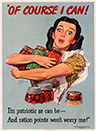
Creative Ration Recipes from WWII
During World War II, food shortages forced families to make creative meals using basic items to save or limit scarce goods like meat, butter, and sugar.

